
11/11/2026
Hydrophilic Fumed Silica 380 in High-Solids Coatings: Dispersion, Thixotropy, and Verification Tests
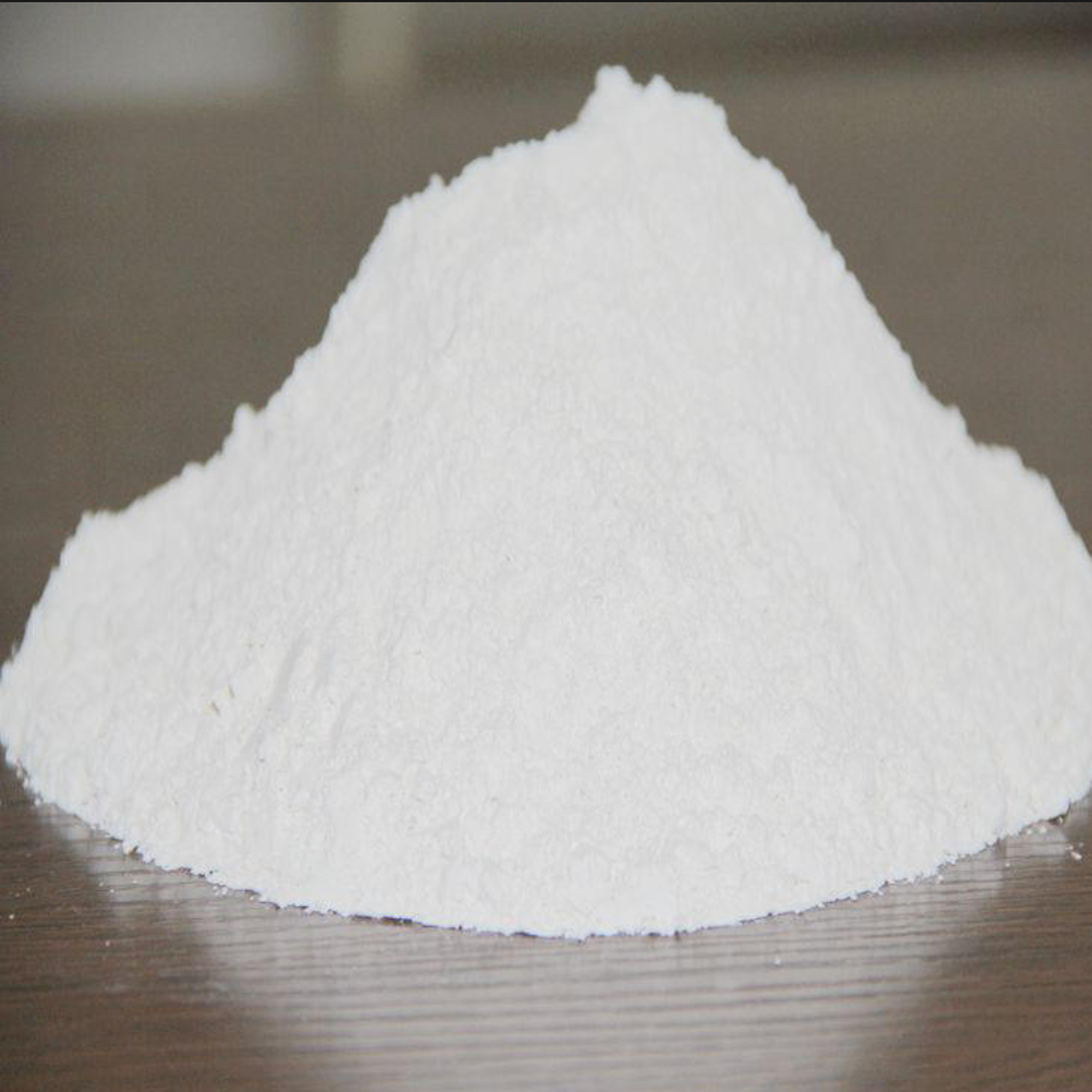
What Hydrophilic Fumed Silica 380 Does in a High-Solids Coating
Hydrophilic fumed silica is a synthetic, amorphous silica made by flame hydrolysis. Its primary particles are nanoscale and fuse into branched aggregates; those aggregates cluster into agglomerates held together by hydrogen bonding. In a coating, the silica network that forms after dispersion is what delivers thixotropy: low viscosity under shear for application, rapid viscosity recovery when shear stops to resist sag and settling.
The 380 grade sits at the higher end of the surface-area range within the hydrophilic fumed silica family. Compared with Hydrophilic Fumed Silica 200, the 380 grade offers a higher surface area and is positioned for stronger thickening and reinforcement requirements, per supplier product data. More surface area means more silanol sites available for hydrogen bonding per unit mass, so a given loading typically builds a stronger network. The practical consequence for high-solids coatings is that you usually reach a target sag resistance or anti-settling performance at a lower addition level than with a 200 grade, but the dispersion step becomes less forgiving.
That trade-off is the core evaluation question. High-solids systems carry less solvent to thin the mill base, so mechanical shear during dispersion is the main tool for breaking agglomerates. If the shear energy is insufficient, the silica stays partly agglomerated, and you get the worst outcome: a viscosity increase without the thixotropic structure you paid for.
Mechanism: Why Surface Area Drives Both Performance and Risk
Hydrogen bonding and network recovery
Hydrophilic fumed silica carries silanol groups on its surface. In non-polar and weakly polar media, adjacent particles associate through hydrogen bonds, forming a three-dimensional network. Shear disrupts the bonds; when shear is removed, the bonds reform. The speed and completeness of that recovery is what formulators measure as thixotropy, and it is what keeps a thick high-solids film from sagging on a vertical substrate.
What higher surface area changes
At equal loading, a higher-surface-area grade presents more bonding sites and a finer effective network. The measurable effects are a higher low-shear viscosity, a larger yield stress, and often a more pronounced shear-thinning profile. The cost is that the same agglomerate strength that resists breakdown also resists wetting, so the 380 grade demands more attention to the dispersion sequence and to the choice of wetting and dispersing aids.
Where the network can be lost
The network is sensitive to anything that competes for silanol sites or disrupts particle contact. Polar solvents, certain surfactants, and high levels of low-molecular-weight glycols or amines can weaken the structure. In high-solids systems, this matters because the reduced solvent load concentrates these competing species. If a formulation shows good sag resistance in the lab but fails in production, check whether a dispersant or cosolvent was added after the silica dispersion step.
Dispersion: The Step That Decides Whether the Grade Works
Fumed silica is supplied as low-bulk-density agglomerates. The goal of dispersion is to wet the agglomerates and break them down to the aggregate scale, distributing aggregates evenly through the vehicle. Partial dispersion is the most common cause of a formulation that underperforms its datasheet expectations.
Sequence rules that matter
- Add silica into the vehicle under shear, not the reverse. Dumping liquid onto dry silica traps air and creates lumps that are hard to break later.
- Disperse before adding rheology-sensitive or competing additives. Adding dispersants, glycols, or amines before the silica network has formed can interfere with structure build.
- Control temperature. High shear raises temperature, and viscosity response is temperature-dependent. Compare dispersion trials at a controlled temperature, or you will misread the silica's contribution.
- Match equipment to the grade. High-speed dissolvers work for many systems, but a 380 grade may need a bead mill or a longer high-shear cycle to reach full development, depending on the vehicle.
Diagnosing incomplete dispersion
Three symptoms point to poor dispersion rather than a wrong grade: a viscosity that is lower than expected at a given loading, visible gel particles or specks in a drawdown, and a thixotropic index that does not match the target. Before changing grades or increasing loading, run a dispersion time study: sample the mill base at intervals, measure low-shear viscosity and thixotropic index, and find the point where the curve flattens. That plateau is your minimum reliable dispersion time for the equipment and batch size.
Thixotropy: What to Measure and What the Numbers Mean
Thixotropy is not a single number. It is a time-dependent behavior, and different test methods capture different aspects of it. For procurement and quality decisions, agree on the method with the supplier before you compare lots.
| Test | What it captures | Typical use | Limitation |
|---|---|---|---|
| Low-shear viscosity (single point) | Network strength at rest | Incoming lot check against a reference | Insensitive to recovery speed; depends heavily on temperature and instrument |
| Thixotropic index (two-speed ratio) | Degree of shear thinning | Fast comparative screen | Ratio depends on the two speeds chosen; not a physical constant |
| Three-interval thixotropy test (3ITT) | Structure breakdown and recovery over time | Predicting sag and leveling in application | Requires defined shear rates and recovery intervals; results are method-specific |
| Yield stress (controlled stress ramp) | Stress needed to start flow | Anti-settling and sag resistance targets | Ramp rate affects the result; report the method |
| Sag test on a vertical panel | End-use behavior | Formulation validation | Film thickness, substrate, and cure conditions must be fixed |
Use the instrument tests to screen and the application test to confirm. A lot that passes a viscosity specification but fails a sag test is telling you something about recovery speed, not about network strength alone.
Verification Test Methods for Incoming Lots
A workable incoming inspection plan for Hydrophilic Fumed Silica 380 has three layers: identity and physical properties, dispersion behavior in a standard vehicle, and performance in a representative coating.
Layer 1: identity and physical properties
- Moisture content or loss on drying, measured by a defined method and reported with the test conditions.
- Loss on ignition, which reflects residual surface chemistry and organic content.
- Bulk density, useful as a consistency indicator and for handling and dosing checks.
- Surface area, if the supplier reports it and your lab can verify it. Surface area is the property most directly tied to the grade's thickening behavior.
Layer 2: dispersion behavior in a standard vehicle
Fix a reference formulation, a dispersion time, an equipment type, and a temperature. Measure low-shear viscosity and thixotropic index against a retained reference sample. This layer catches lot-to-lot drift that physical property tests miss, because it reflects how the silica actually behaves under shear.
Layer 3: application performance
Run sag resistance, anti-settling, and leveling checks in the actual coating, at the actual film thickness. Keep the reference sample under the same storage conditions and re-test it alongside each new lot, because silica behavior can change with moisture pickup during storage.
Document every method with its parameters: instrument, spindle or geometry, shear rate or stress ramp, temperature, and sample preparation. A viscosity number without its method is not a specification.
Choosing Between 200 and 380 Grades
The 200 and 380 grades are not interchangeable drop-in options. The 200 grade is positioned for rheology control, reinforcement, and anti-settling, while the 380 grade is positioned for stronger thickening and reinforcement requirements, based on supplier product descriptions. The decision usually comes down to three factors.
- Target rheology profile. If you need a high yield stress and strong sag resistance at low addition levels, the higher-surface-area grade is the natural starting point. If you need moderate thickening with easier dispersion, the 200 grade may be the better fit.
- Dispersion capability. If your production line cannot deliver enough shear energy to fully develop a 380 grade, the performance advantage will not show up in the finished coating. Be honest about equipment limits before selecting the grade.
- Solids and solvent balance. High-solids systems have less solvent to help wet-out, which raises the dispersion challenge. In these systems, the grade choice and the dispersion process must be evaluated together, not separately.
A useful rule: select the lowest surface area that meets your rheology target with reliable dispersion in your equipment. Higher surface area is not automatically better if the process cannot develop it.
Common Failure Modes and What They Indicate
- Sagging despite target viscosity. Often a recovery-speed problem rather than a strength problem. Check the 3ITT recovery curve and the time between application and cure.
- Settling in storage. May indicate insufficient yield stress or a network weakened by a competing additive added after dispersion.
- Gels or seeds in the film. Usually undispersed agglomerates. Review the addition sequence and shear energy.
- Viscosity drift during storage. Can reflect moisture uptake by the silica or ongoing structure build. Check packaging integrity and storage conditions.
- Batch-to-batch variation. If lots differ in behavior but pass physical property tests, your specification may be missing a dispersion-behavior test.
What to Ask a Supplier Before Qualification
Procurement decisions on a rheology additive should rest on documented, verifiable information. Ask for the grade's technical data sheet with the reported physical properties and their test methods, the packaging format and net weight, and the storage recommendations. Ask whether the supplier can provide a retained sample or a certificate of analysis for the lot you will receive, and confirm that the surface area and moisture specifications are stated with their test methods.
For high-solids coatings, also ask how the supplier recommends dispersing the grade and whether they have guidance on addition levels for your vehicle type. Treat any recommendation as a starting point for your own trials, not as a validated formulation.