
11/11/2026
Vacuum Insulated Cold Boxes for Cold Chain Logistics: Supplier Evaluation and Specification Trade-offs
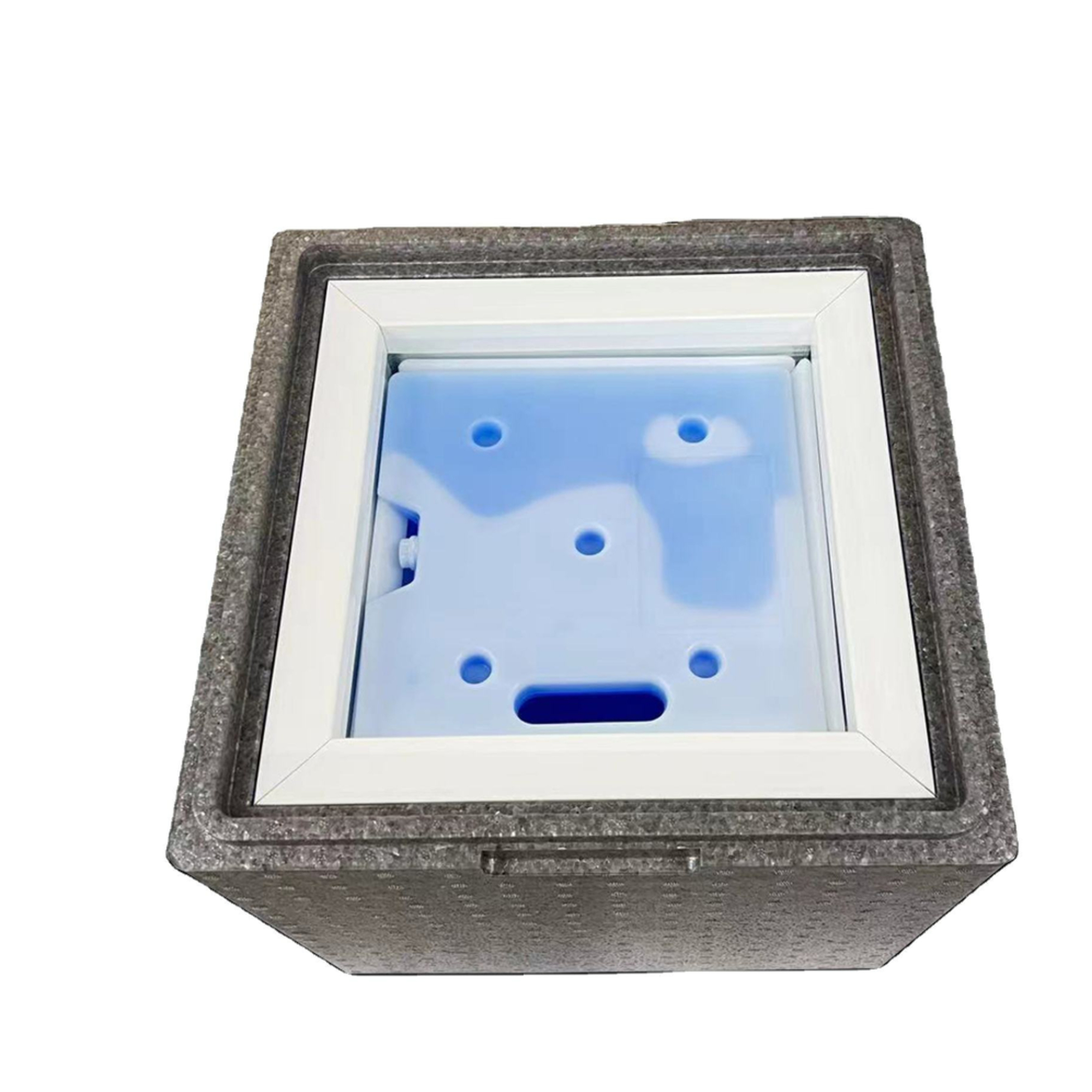
What a vacuum insulated cold box must prove before you approve it
A vacuum insulated cold box is a temperature-controlled shipping container whose walls contain vacuum insulation panels (VIPs). The vacuum core suppresses gas conduction, which is why VIP-lined boxes can achieve a given hold time in thinner walls than conventional foam-only designs. That advantage is real, but it shifts risk: the vacuum panel becomes the critical component, and its condition, edge detailing, and protection from puncture determine whether the box performs as specified.
For buyers moving from consideration to supplier evaluation, the decision is not simply “which box holds temperature longest.” It is whether the supplier can demonstrate repeatable thermal performance for your payload, route, and handling conditions, and whether the panel construction survives the way your logistics network actually treats packaging.
Map your cold chain requirements before comparing suppliers
Suppliers can only quote accurately against a defined brief. Build that brief first, because two boxes with similar external dimensions can behave very differently depending on payload mass, ambient profile, and duration.
- Temperature band and allowable excursion: the payload’s permitted range, including any brief excursion tolerance and how it is measured.
- Hold time: the required duration from packing to unpacking, including realistic door openings, staging, and delays.
- Ambient profile: the external temperature range the box must face, not a single nominal value.
- Payload: mass, volume, packaging, and thermal mass of the goods, since a box validated for one payload may not hold the same profile for another.
- Handling and mode: parcel, pallet, air, road, or sea; drop, stacking, and vibration exposure; and whether the box is reused or single-trip.
- Conditioning: whether phase-change materials or gel packs are preconditioned, and who controls that step.
Write these into a requirements table and ask every supplier to respond against the same line items. This makes quotations comparable and exposes assumptions that would otherwise stay hidden in a brochure.
Specification trade-offs that drive real cost and risk
Panel thickness versus internal volume
Thinner VIPs free up internal volume for a given external footprint, but thinner panels can be more sensitive to edge effects and handling damage. Thicker panels or hybrid foam-plus-VIP walls may be more robust but reduce usable space. Decide whether your constraint is external dimension, internal capacity, or hold time, and make that priority explicit in the brief.
Vacuum panel coverage versus foam-only zones
Full VIP coverage gives the strongest thermal resistance per unit thickness. Partial coverage, with foam at corners, lids, or high-wear areas, can improve durability and simplify assembly at some thermal cost. Ask for a wall-by-wall construction drawing rather than a single overall U-value, because thermal bridging at edges and joints often dominates real-world performance.
Core material and panel construction
VIP cores are commonly made with fumed silica, microfiber, or hybrid materials. Fumed silica cores are used in vacuum insulation because the high-surface-area silica supports a fine pore structure; hydrophilic fumed silica grades such as 200 and 380 are also supplied for rheology and reinforcement in coatings and other formulations, but a coating-grade silica is not automatically the right VIP core specification. Evaluate the panel as a finished system: core, envelope film, getter, and edge sealing all matter. Request the panel construction and the supplier’s incoming inspection criteria for the core and film.
Reusable versus single-trip design
Reusable boxes need robust hinges, latches, replaceable seals, and a panel protection strategy that survives cleaning and repeated handling. Single-trip boxes can be lighter and simpler but must still survive the outbound journey. Neither is inherently better; the choice depends on route length, return logistics, and cleaning infrastructure.
Conditioning and phase-change materials
The box is only part of the thermal system. Phase-change materials, gel packs, and preconditioning procedures interact with panel performance. Ask the supplier whether validation includes the conditioning method and payload configuration, and who is responsible for maintaining that procedure in production.
| Decision | Option A | Option B | What to request |
|---|---|---|---|
| Wall construction | Full VIP coverage | Hybrid VIP plus foam | Wall-by-wall drawing and thermal bridge analysis |
| Panel core | Fumed silica core | Microfiber or hybrid core | Core specification and incoming inspection criteria |
| Use model | Reusable | Single-trip | Handling and cleaning test evidence |
| Validation basis | Standard payload profile | Custom payload profile | Test report with payload, ambient, and duration stated |
How to read thermal performance claims
Thermal claims are only meaningful when the test conditions are stated. A hold time quoted without payload mass, ambient temperature profile, starting temperature, and excursion limit is not a specification you can plan around. Ask for the full test report, not the summary line.
Check whether the reported performance comes from a standard test method, an internal protocol, or a simulation. Each can be useful, but they answer different questions. A standard method supports comparison across suppliers; an internal protocol may better reflect your route but is harder to benchmark. If the supplier cites a standard, confirm the edition and the scope, and ask whether the test was performed on the exact configuration being quoted.
Also ask about aged performance. Vacuum panels can lose vacuum over time through permeation or envelope damage, and thermal conductivity can rise as a result. Request any aging data the supplier holds and ask how the quoted performance accounts for the intended service life. If no aging data is available, treat the claim as new-panel performance and plan incoming and in-service checks accordingly.
Supplier evaluation: evidence to request and questions to ask
Manufacturing and quality evidence
- Panel construction drawing, including core, film, getter, and edge sealing.
- Incoming inspection criteria for core material and barrier film.
- In-process vacuum level or leak checks, and how out-of-spec panels are handled.
- Finished-box inspection: dimensions, seal integrity, latch function, and panel protection.
- Traceability from panel batch to finished box.
Validation evidence
- Test reports with payload, ambient profile, starting temperature, duration, and excursion criteria.
- Whether the tested configuration matches the quoted configuration.
- Any aging or cycling data, and the conditions under which it was generated.
- Drop, stacking, and vibration test results if your route requires them.
Commercial and support questions
- What is the minimum order quantity and how is it structured across sizes?
- What is the production lead time for a first order and for repeat orders?
- Can the supplier support sample evaluation before a production commitment?
- What documentation accompanies each shipment?
- How are damaged or out-of-spec units handled?
- Can the supplier support a change in payload or route with revalidation?
Record answers in a comparison matrix. A supplier that answers precisely and provides documents is easier to audit later than one that answers confidently without evidence.
Sample and first-order validation plan
Do not scale a cold box into production on the basis of a datasheet alone. A staged validation plan reduces the risk of a late failure.
- Sample inspection: check dimensions, wall construction, panel protection, seals, latches, and finish against the drawing.
- Thermal validation: run the box with your actual payload and conditioning procedure under a defined ambient profile, and log temperature at multiple points.
- Handling trial: subject a sample to the drop, stacking, and vibration exposure your route involves, then repeat the thermal test to see whether performance changed.
- First production order: inspect a sample from the first batch and compare it with the validated sample; confirm traceability and documentation.
- Incoming checks: define a routine inspection for each shipment, including visual panel integrity and a thermal spot check where practical.
Keep the validated sample and its test report as the reference configuration. Any change in core, film, dimensions, or assembly should trigger a revalidation conversation.
Warning signs during supplier evaluation
- Hold times quoted without payload, ambient, or duration conditions.
- No wall-by-wall construction drawing, or reluctance to identify the panel core and film.
- Test reports that cannot be tied to the quoted configuration.
- No description of panel protection at edges, corners, or high-wear zones.
- No incoming inspection or traceability process for panels.
- Vague answers on how damaged panels are detected before assembly.
- Pressure to commit to volume before a sample validation.
None of these alone is disqualifying, but a pattern of them suggests the supplier is selling a concept rather than a controlled product.
Where fumed silica fits in the insulation supply chain
Fumed silica appears in cold chain insulation in two distinct roles. As a VIP core material, it supports a fine pore structure that helps the panel hold vacuum and limit gas conduction. As a formulation additive, hydrophilic fumed silica grades are used for rheology control, reinforcement, and anti-settling in coatings and other systems. These are different applications with different specifications, and a supplier’s coating-grade silica should not be assumed to be a validated VIP core without documentation. When evaluating a cold box supplier, ask which core material is used, how it is inspected, and whether the panel supplier provides core-level traceability.
Next steps for procurement
Turn your cold chain brief into a one-page requirements sheet, send it to shortlisted suppliers, and ask for the construction drawing, test report, and inspection plan in the first response. Score responses against the same criteria, then validate a sample under your own payload and ambient conditions before committing to production volume. The supplier that can document its panel construction and validation method is the one worth a second round.